
Slot volatility guide — what it means and how to use it
Slot volatility guide
RTP tells you what a game pays back. Volatility tells you how. That difference determines whether you enjoy the machine — or walk away frustrated.
What is volatility?
Volatility — also called variance — describes the risk profile of a slot machine. It is a measure of how much and how often the game pays out.
Low volatility: frequent, small wins. Your bankroll barely moves. You can play for a long time without big losses — but also without big wins.
High volatility: rare, large wins. Your bankroll can drop fast during dry spells — but one bonus round can turn everything around. These are the games with the massive maximum wins.
Volatility is not better or worse. It is a question of what kind of experience you are after — and how much bankroll you have to work with.
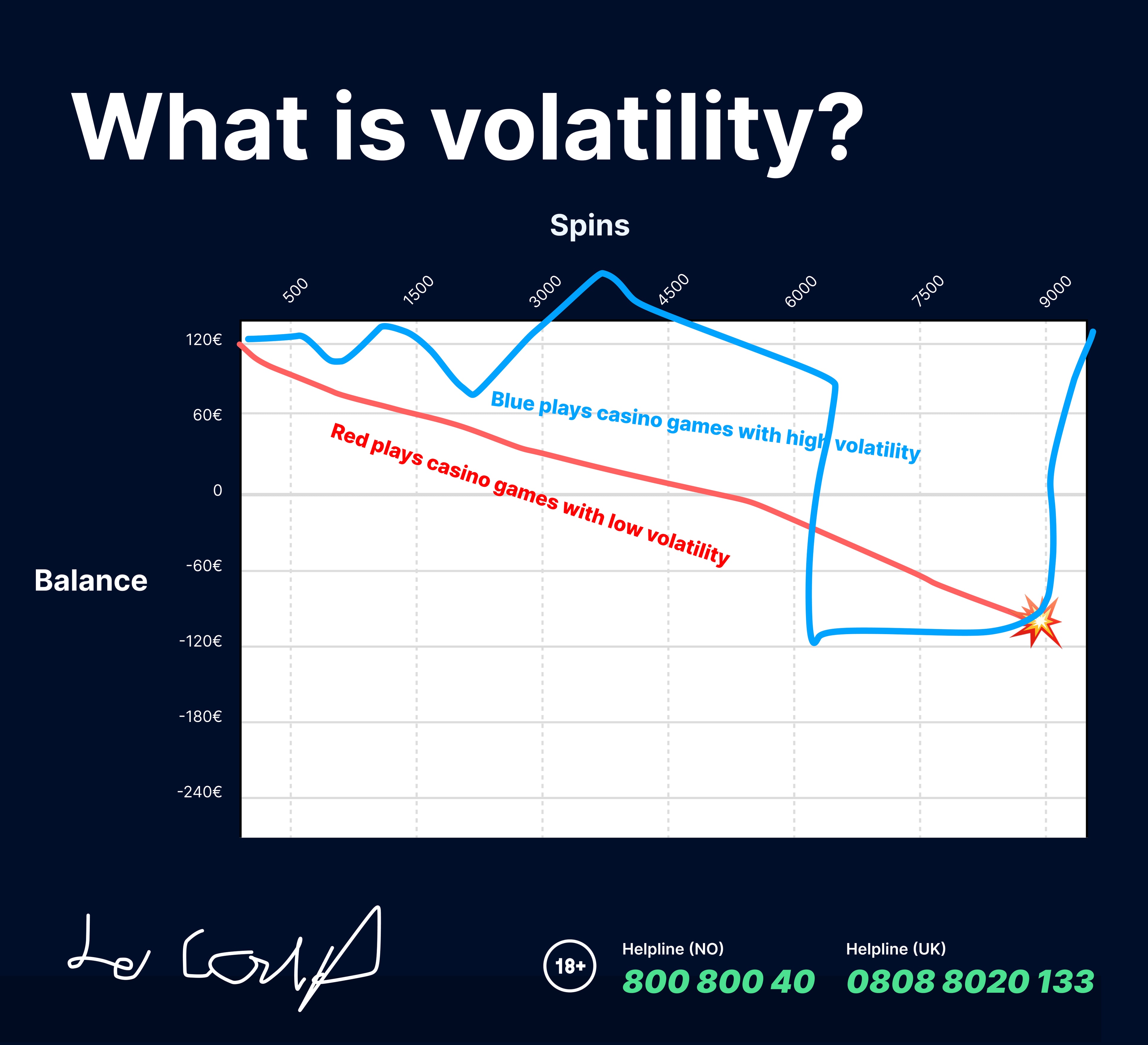
Low, medium and high — what it means in practice
Low volatility suits players who want to play for a long time on a limited bankroll. Wins are steady but rarely spectacular. Examples: Blood Suckers (NetEnt, RTP 98%), Starmania.
Medium volatility is the balance between the two. Regular wins combined with occasional larger payouts. Most popular slots sit here.
High volatility is for players chasing the big win who can handle long dry spells. Book of Dead, Reactoonz, Dead or Alive 2 — all high volatility, all with maximum wins of 5,000x or more.
Volatility and bankroll management
Bankroll management is not glamorous, but it is what separates a deliberate player from one who empties their account in an hour.
Rule of thumb for high volatility: have at least 100–200 bets in your bankroll before you sit down. If you are playing $10 per spin, you need $1,000–$2,000 to survive the dry spells.
For low volatility, 50–100 bets is enough. The game pays more steadily and you do not need as large a buffer.
Always set a loss limit before you start — and stick to it. Volatility is not a strategy for winning. It is a tool for choosing the right game for your bankroll.
How to find a game's volatility
Game developers do not always state volatility explicitly. But there are ways to find out.
Check the game's paytable: large differences between the lowest and highest win indicate high volatility. A game with a maximum win of 5,000x and a minimum win of 0.5x is likely high volatility.
Read game reviews from reliable sources — they almost always state the volatility level.
Play in demo mode: after 50–100 spins you start to feel the rhythm. Frequent small wins = low volatility. Long dry spells followed by big hits = high volatility.
Volatility vs. RTP: which matters more?
Both matter — but they answer different questions.
RTP tells you the long-term mathematical edge. Volatility tells you the experience along the way.
A game with high RTP and high volatility can feel like a loss for hours — then deliver a massive win. A game with lower RTP and low volatility can provide a steady, enjoyable session.
Choose RTP to minimise long-term loss. Choose volatility to match your playing style.
High RTP · Low volatility
Slots with high RTP and low volatility
- 1.
Mega Joker
NetEnt · RTP up to 99% · Classic fruit machine with jackpot mode
- 2.
Uncharted Seas 1428
Thunderkick · RTP 98.2% · Unusually high RTP, calm gameplay
- 3.
Book of 99
Relax Gaming · RTP 99% · Among the highest RTPs in the industry
High volatility
Slots with high volatility
- 1.
Pragmatic Play · Especially high volatility when playing with Hades · Massive wins possible
Frequently asked questions
What is the difference between volatility and RTP?
RTP tells you the long-term mathematical return. Volatility tells you the experience along the way — how often and how much the game pays out in a typical session.
Which volatility is best for beginners?
Low to medium volatility suits beginners best. Wins are steadier, your bankroll lasts longer, and you get more playing time for your money while learning the game mechanics.
Can I find out a game's volatility before playing?
Yes. Check the game's paytable for large differences between the lowest and highest win. Read reviews from reliable sources. Play in demo mode and observe the rhythm — frequent small wins indicate low volatility.
Read next